Most tent buying goes wrong in one of two ways: a tent chosen for a picture of the trip rather than the trip itself, or a tent chosen by the number on its label. This guide takes the choice in the order that matters: who is sleeping in it and how it gets to the pitch, how big it needs to be and which shape suits the trip, then what keeps it dry and aired in British weather.
Who is sleeping in it, and how you will get there
Start with the people. One walker, a couple, two friends at a festival and a family of five with a dog all need different things, and very few tents suit all of them. Think of who will sleep in it on a normal trip, not the one big trip with extra friends, and how many nights you usually stay. A tent for a week needs room to live in when it rains on the third day.
Then think about how the tent travels, because that settles more than anything else.
On your back
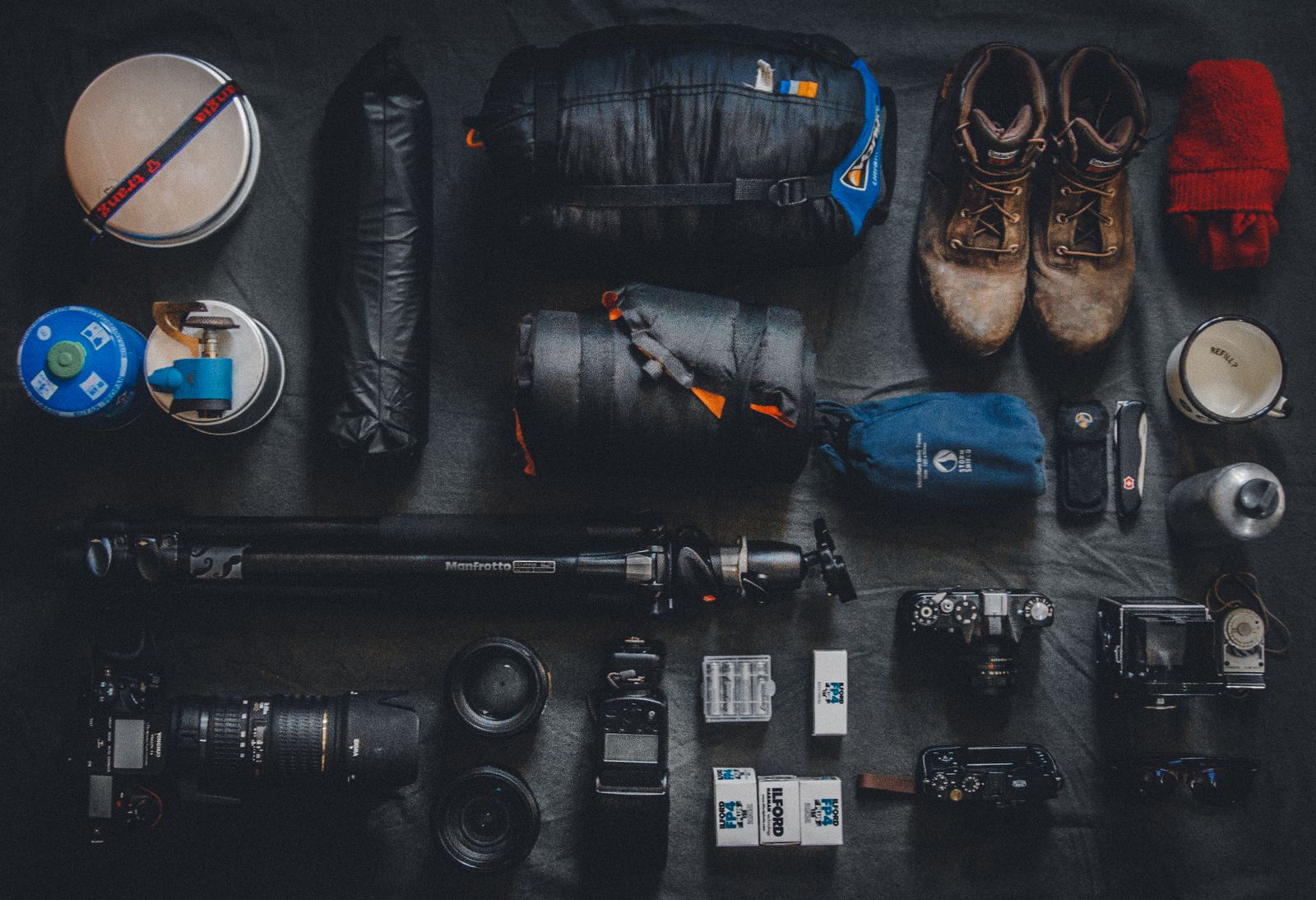
If you carry the tent on a long-distance path, a walk into the hills or a trip from one campsite to the next by train or bike, weight and packed size come first. A tent you carry for days should be as light as you can manage while still keeping you dry, and small enough to go inside or on your rucksack. These tents are mostly for one or two people. See backpacking and trekking tents.
From the car park
Festivals and some campsites make you walk from the car with everything you have, sometimes a long way across a field. Here a tent that is quick to pitch and easy to carry over one shoulder matters more than room to stand up. See festival tents.
Beside the car
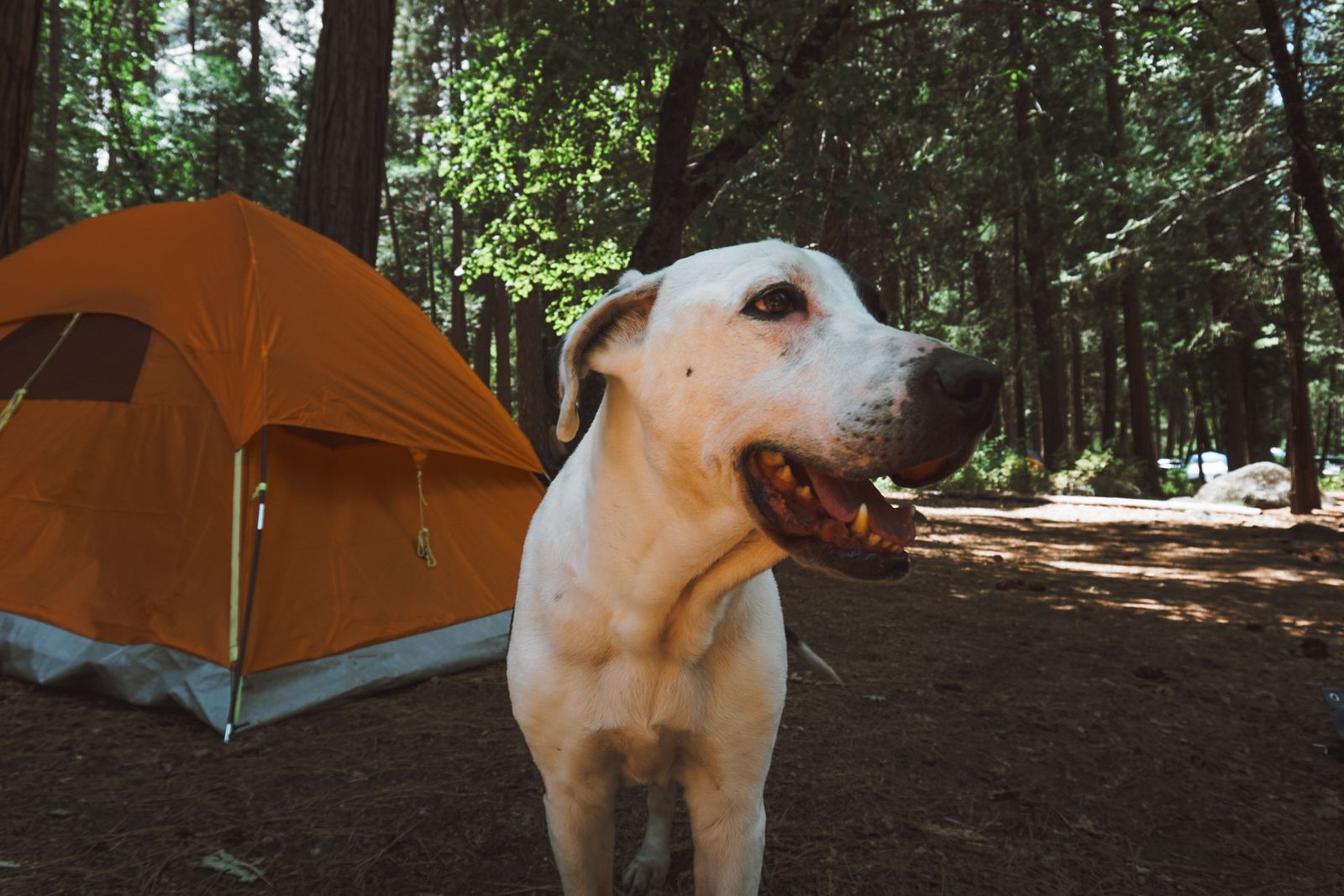
On most British campsites you park on or next to your pitch. Weight then hardly matters, and you can choose for room, headroom, a porch to sit in and bedrooms that close off. This is where the big pole tents, air tents and canvas tents belong. See family tents.
Two more questions help. Will you usually pitch it on your own? Some big tents are a job for two. And will you camp in winter, or only between spring and autumn? Both come up again below.
How big a tent you really need
The number on a tent's label, 2-man or 6-person, is the number of sleeping mats that fit side by side on the floor with nothing else inside. It is not the number of people who will be comfortable for a week. Bags, boots, a cool box and room to sit up all take floor that the label has already counted as beds.
So the usual advice is to buy one size up from the number of people sleeping in it:
- one walker counting every gram: a 1-man tent, or a light 2-man tent for room to bring the rucksack inside on a wet night;
- two adults: a 3-man tent for comfort, or a 2-man tent if you are carrying it and every gram counts;
- a family of four: a 5-man or 6-man tent, ideally with a living area;
- five or six people for a week: an 8-man tent with two bedrooms and a living area.
Read the measurements as well as the number, because makers do not all count the same way. Some count only the bedroom and leave the living area free; others count the whole floor, living area included, and give the number as a span such as 4–6 or 8–12. The guide to tent sizes shows how to read the floor sizes on a product page, how much width a sleeping mat really takes, and what to look for if you are tall.
Bigger is not always better. A bigger tent is heavier, needs a bigger pitch, takes longer to put up, and has more air inside to warm on a cold night. Buy the size you need for the trips you take most often.
Which style suits the trip: dome, tunnel, pop-up, air, bell and tipi
The style of a tent is the way it is held up, and that decides how it pitches, how it copes with wind and how much of the floor you can use.
Dome tents
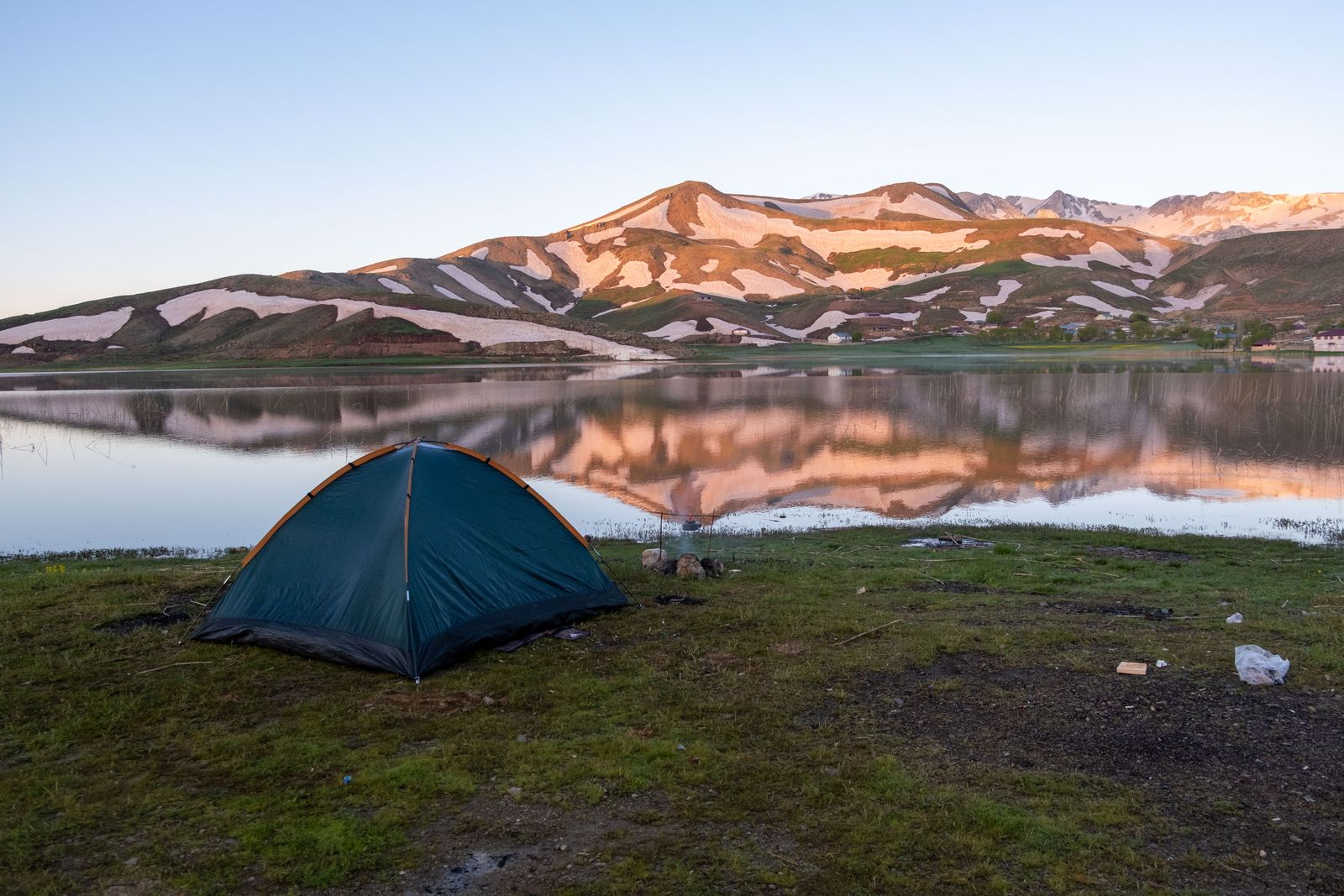
Two or more flexible poles cross over the top and bend the tent into a dome. Most dome tents stand up on their own before a peg goes in, so you can turn the door away from the wind before pegging it. Domes run from light tents for one or two people to a family one-touch dome 400 by 400cm and 210cm high. See dome tents.
Tunnel tents
Hoops in a row hold the fabric up. The walls rise almost straight, so more of the floor is usable for the weight than in a dome, and there is room for a long porch or a living hall. A tunnel tent does not stand on its own: it needs pegging out at both ends, and it is happiest pitched with its low end into the wind. Many two-bedroom family tents are tunnels. See tunnel tents.
Pop-up and instant tents
The frame is built in, so the tent springs open from the bag or opens with one push at the top. They are the quickest tents to put up, which suits festivals, the beach and a night away. Two things to know: many pop-ups fold to a wide flat disc rather than a small bag, so they are awkward to carry far. and some are beach shelters made for shade, not for a night of rain, so check each one for a flysheet and a stated waterproof rating. See pop-up tents.
Air tents
Tubes of air, called air beams, take the place of poles. You peg the tent out flat, connect the pump, and the beams fill and lift it into shape. There are no poles to thread or snap, so one person can put up a big tent quickly. Air beams weigh more than poles, though, so these are tents for the car. Check what pump comes in the box, and carry a repair kit. See inflatable air tents.
Bell tents
A round tent with a low upright wall all the way round and a roof that rises to one tall centre pole. There is room to stand across most of the floor and space for real beds round the edge. Bell tents are heavy and made to stay up for days at a time, which is why they are the classic glamping tent: the large family canvas bell tent here is 400 by 400cm, 240cm high and weighs about 20kg. See bell tents.
Tipi and pyramid tents
A tall cone or pyramid of fabric on one centre pole, held out by pegs round the edge. One pole and a ring of pegs make a big tent for very little weight, and the height is all in the middle. Many tipis have a stove jack, a fireproof opening for a stove's flue, which makes them hot tents for cold weather. See tipi tents.
As a rough guide: carrying it, look at domes, tunnels and pyramids; for a quick weekend or a festival, pop-ups; for a family week beside the car, tunnels with bedrooms, air tents or a bell tent; for cold weather, a tipi or pyramid with a stove jack.
Keeping dry in British weather
A tent keeps the rain out in three ways: the fabric, the seams and the way it is pitched. A good rating on a badly pitched tent will still let you down.
The waterproof rating
The figure in millimetres on a product page is the hydrostatic head: the height of a column of water the fabric holds back before water comes through, measured in a laboratory test to the standard ISO 811. Around 1,000mm is usually the lowest figure called waterproof. Most lightweight flysheets are rated between about 1,500mm and 3,000mm, and more is worth having for long wet trips or a tent left up for days. The groundsheet is often rated higher than the flysheet, because you kneel and lie on it and press water through. The Archeos 3-person tent here is a typical example: 2,000mm on the flysheet and 3,000mm on the floor.
- About 1,000mm to 1,500mm. What it usually suits: dry weekends and summer showers.
- About 1,500mm to 3,000mm. What it usually suits: most camping in Britain from spring to autumn.
- Over 3,000mm. What it usually suits: long wet trips, exposed pitches, a tent left up for a week.
The guide to waterproof ratings goes further into the test, the two figures and what to do when a tent starts to let water through.
Seams and zips
Water comes through stitching long before it comes through good fabric, so look for taped or sealed seams. Not every tent has them, and the product page usually says. The Pyramid Tarp Tent here, for example, says its seams are not factory-sealed, and that seam sealant must be bought separately and put on by the owner. Zips should have a flap of fabric over them.
Pitching for rain
Pitch on slightly raised ground, never in a dip where water collects after a downpour. Pull the flysheet taut so it does not touch the inner tent, and peg out every guy line, because a slack flysheet sags onto the inner and lets water through where they meet. Keep the door away from the wind so rain does not blow in each time you open it. If you use a footprint under the tent, tuck its edges in under the groundsheet, or the rain running off the flysheet collects on it and runs underneath you.
Layers, fabric and poles in short
Layers
Most tents are double layer: a breathable inner tent to sleep in, and a waterproof flysheet over it, with a gap of air between them. The moisture you breathe out passes through the inner and settles on the flysheet instead of on your sleeping bag and the flysheet usually reaches past the inner door to make a porch. A single-layer tent is one waterproof skin: lighter and quicker to pitch, but damper inside on a cold, still night. A few winter tents here, the cotton-padded ice fishing tents, have a third, padded layer to hold in warmth. See double layer tents, and the guide to single, double and triple layer tents for how each one behaves.
Fabric
Most tents are polyester or nylon, both light and quick to dry. Oxford cloth is a heavier woven fabric, used here for many family tents and for groundsheets. Canvas and polycotton breathe through the cloth itself and drip less condensation, but weigh far more and must be dried fully before they are packed away. On a product page, the D after a number, as in 20D or 210D, is the denier, a measure of how thick and heavy the yarn is: lower is lighter, higher is tougher. The T, as in 190T or 210T, is the thread count, the number of threads in a square inch of the weave. The guide to tent fabrics takes each one in turn.
Poles
Fibreglass poles are common on family and pop-up tents. They are cheap, but heavier, and can splinter or snap under strain. Aluminium and aluminium alloy poles are lighter and stronger for their weight, and tend to bend rather than shatter, which is why most backpacking and winter tents use them. Steel and iron frames are heavy and very strong, for big cabin tents, shelters and frames that stay up for a season. The guide to tent poles covers each kind and how to mend a broken one in the field.
3-season or 4-season
A 3-season tent is made for spring, summer and autumn: rain, wind and the odd cold night, but not deep snow or winter storms. It is the most common kind of tent, and for most camping in Britain it is the right one. The 3-season tents here are mostly light, double-layer backpacking tents on aluminium or aluminium alloy poles, many with an inner of mesh that lets air through on a warm night. See 3-season tents.
A 4-season tent is built for winter as well: stronger poles, less mesh in the inner tent, more guy points, and a snow skirt round the bottom of the flysheet to stop wind and snow blowing underneath. In Britain the test is more often a gale on an open hillside than snow. Several tents here come in both versions, which shows the difference well. The Archeos 3-person tent weighs 3.5kg as a 3-season tent and 3.9kg as a 4-season one, which adds a snow skirt and less mesh in the inner. The TAIJI2 two-person tent comes with a 3-season inner of net or a 4-season inner of solid nylon. See 4-season tents.
Two cautions. Some makers write "suitable for all four seasons" on beach tents and car awnings, meaning only that they can be pitched in any month, so check a 4-season tent's description for a snow skirt, the poles and the inner tent. And a 4-season tent can be stuffy on a warm summer night, because it is built to keep heat in. If nearly all your trips are between Easter and October, a 3-season tent is the lighter, cooler choice.
Hot tents and stoves
Many of the 4-season tents here are hot tents: tipis, pyramids and tunnels with a stove jack, a fireproof ring in the fabric for a stove's flue to pass through. A hot tent is the only kind of tent that takes a stove, and then only a stove made for it, with the flue going through the stove jack as the maker intended, a carbon monoxide alarm inside, and the vents open. Never take a barbecue, a heater or a stove without a flue into any tent or porch, and never charcoal of any kind, lit or just gone out: carbon monoxide has no smell and it kills. See hot tents with a stove jack.
Weight, packed size and pitching time
Weight
If you carry it, weight decides almost everything. The lightest one-person tents here weigh under a kilo: the Naturehike Star Trails EXT has a minimum weight of about 0.78kg. Many two-person backpacking tents come in under 2kg. Family tents are another matter: the one-touch family dome weighs about 12.7kg, the canvas bell tent about 20kg, and the largest inflatable cabin tent here 95kg.
Check which weight a product page gives. The minimum weight leaves out the pegs, guy lines and bag; the packing weight is what you actually carry. On the two-person Mongar UL the minimum weight is about 1.53kg and the packing weight about 1.67kg.
Packed size
Packed size matters on a rucksack, a bike or in a small car boot. The two-person Mongar UL packs into a bag about 15cm across and 41cm long, small enough to strap to a rucksack. Pop-up tents are the awkward ones: the 3-4 person pop-up tent here folds to a flat disc 72 by 72cm and 5cm thick, which goes over your shoulder on a strap rather than in a bag. A big two-bedroom tunnel tent, such as the LanSheng, packs into a bag 63cm long and nearly 40cm across.
Pitching time
Makers' pitching times assume you know the tent. Pop-up and instant tents are fastest, because the frame is built in, though they still need pegs and guy lines. Air tents come next: the 4-5 person inflatable dome here is ready in around 2 minutes with its hand pump. The two-person backpacking tent with aluminium poles says around 5 minutes for a new user. A big family tent with bedrooms takes two people and a good deal longer.
Whatever you buy, put it up in the garden before the first trip, so you know how it goes together and that every peg and pole is in the bag.
Fresh air and condensation
Waking up to a wet tent on a dry night is usually condensation, not a leak. You breathe out moisture all night, and when it meets fabric cooled by the night air it turns to water, the same way a cold window steams up. It is worst on cold, still nights and in a full tent with wet clothes inside.
You can keep it down:
- open the vents, and on a dry night a door, so damp air can get out;
- choose a double-layer tent, where the moisture settles on the flysheet rather than on you;
- pitch where a breeze can reach the tent, not in a hollow or tight against a hedge;
- keep the flysheet taut, so it does not touch the inner tent;
- leave wet coats and boots in the porch, and cook outside, away from the tent;
- wipe the inside of the flysheet with a small towel in the morning before you pack.
When you compare tents, look for mesh panels, vents high in the flysheet and doors on both sides, which let air cross the tent. Single-layer tents suffer most, because the skin you sleep under is the one the moisture forms on. In summer the problem turns round: a tent in full sun heats up quickly after dawn, so mesh doors matter for heat as well as damp.
Questions people ask
What kind of tent suits a first camping trip?
For most people starting out, a double-layer dome or tunnel tent one size bigger than the number sleeping in it, with taped seams and a flysheet rated at about 1,500mm or more, pitched on a campsite beside the car.
Can one person pitch a family tent?
Air tents and pop-up tents, yes, with practice. Big pole tents, canvas bell tents and two-bedroom tunnel tents are far easier with two people: one to hold and one to peg.
Which way should the door face?
Away from the wind, so rain does not blow in each time it opens. With a tunnel tent, pitch the low end into the wind.
Is a 4-season tent warmer?
A little: less mesh and a snow skirt keep draughts out. But warmth at night comes mostly from your sleeping bag and the mat under you, so a good mat matters as much as the tent.
Can I cook in my tent?
No. Cook outside, away from the tent. The one exception is a hot tent with the stove made for it, its flue through the stove jack and a carbon monoxide alarm inside.
Where to go next
If you know the trip, start with backpacking and trekking tents, festival tents, family tents or 4-season tents. For one part of the choice in depth:
- Tent sizes explained: what the number on the label means, and how to read the floor plan
- Tent waterproof ratings explained: the millimetre figures and keeping a tent dry
- Single, double and triple layer tents: condensation, warmth and weight
- Tent poles: aluminium, fibreglass, steel and air beams
- Tent fabrics: polyester, nylon, Oxford and canvas