A tent's fabric decides how much it weighs, how small it packs, how it copes with rain and sun, and how it feels inside on a warm morning or a cold night. Product descriptions name the fabric with a string of letters and numbers, such as "15D ripstop nylon with silicone coating" or "210T polyester, PU3000mm", and most tents use more than one: a nylon flysheet over a polyester floor, or a polyester tent on an Oxford groundsheet. This guide explains what those figures mean, goes through each fabric the shop sells, and ends with how to look after each one so it lasts.
Every tent in the shop is also filed by the fabrics its maker names, in Tents by Fabric, so a tent with a nylon flysheet and an Oxford floor is in both of those ranges.
What the D and T figures on a fabric mean
Two letters turn up in almost every description: D and T. They measure different things, and neither on its own tells you whether a fabric is waterproof.
D: the denier, how thick the yarn is
The number before the D is the denier, a measure of how thick and heavy the yarn is: it is the weight in grams of 9,000 metres of that yarn. So a 10D yarn is very fine, and 9,000 metres of it weighs 10 grams, while 900D is ninety times as heavy. In this shop the figures run from 10D nylon on the lightest backpacking tents, through 15D, 20D and 40D nylon on other light tents, 150D and 210D Oxford on floors, 400D and 600D on inflatable tents and motorbike shelters, up to 900D Oxford on the bell tent yurts. A higher denier is generally tougher, heavier and slower to dry.
T: the thread count, how close the weave is
The number before the T is the thread count: the number of threads in a square inch of fabric, counting both directions of the weave together. You will see it most on polyester, as 170T, 190T or 210T, and on fine nylon, such as "20D 380T". A higher T is a closer, denser weave, which feels smoother and lets less wind through. But a higher thread count is not, on its own, a stronger fabric: a fine yarn woven closely can still be lighter and weaker than a thicker yarn woven more openly. Read the D and the T together.
Grams per square metre
Canvas, polycotton and plastic sheet are often described by weight instead: grams per square metre, written gsm, g/m² or simply g. The polycotton in the shop runs from 200gsm on an inflatable roof tent and 210g/m² on the OneTigris CONIFER hot tent to 280g and 305gsm on the roof tents and awnings. A heavier fabric of the same kind is thicker and harder wearing, and it weighs more to carry.
The words around the numbers
Taffeta is a smooth, fine, close plain weave, which is what most 190T and 210T polyester is. Ripstop has a grid of thicker threads woven in, so a small tear stops at the next line instead of running across the panel. The coating is named after the fabric: PU (polyurethane) or silicone. The coating is what keeps the rain out, and how well it does that is the rating in millimetres, which has its own guide: tent waterproof ratings explained.
Polyester
Polyester is the most common tent fabric, and the shop's largest fabric range: polyester tents. Its great strength is that it barely stretches when it gets wet. Nylon takes up a little water and stretches; polyester takes up far less, so a polyester flysheet pitched tight in the afternoon is still tight after a night of rain. It also stands up to sunlight better than nylon. Both make it a good fabric for family tents, pop-ups and any tent left pitched for a week.
The polyester tents in the shop include pop-up and instant tents, mostly 190T or 210T polyester on a spring frame; family tents with bedrooms and a living area; beach and sun shelters in thin polyester taffeta with a silver coating; car tailgate tents and awnings; and hot tents such as the Naturehike Ranch Fire, made in flame-retardant 210T polyester. A 1-person cot tent here is "190T polyester taffeta with PU 2000mm coating and taped seams", which is a fair example of how a full description reads: the fabric, the weave, the coating and its rating, and the seams.
Silver coatings and UV
Many polyester beach tents and single-layer tents have a silver coating on the outside. It reflects the sun's heat, so the tent stays cooler, and it blocks ultraviolet light, which protects both the people inside and the fabric. Makers give it a UPF figure, the sun protection factor for fabric: several single-layer tents here give UPF 30+, and one 2-person beach tent is "170T silver-coated polyester taffeta for UV protection".
Nylon
Nylon is the lightest strong tent fabric, which is why most ultralight backpacking tents are made of it. The nylon in the shop is very fine, from 10D to 40D, and most of it is coated with silicone. The lightest tent here, the Naturehike Star Trails EXT in 10D nylon, packs to about 0.87kg for one person. Many light tents use nylon for the flysheet and something tougher underneath: the Mongar UL has a 15D ripstop nylon flysheet with silicone coating over a 210T polyester floor. See nylon tents and backpacking and trekking tents.
Nylon stretches when it is wet
This is the one thing to know about nylon. It takes up a little water and stretches, by a few per cent, so a flysheet pitched tight on a dry afternoon can sag by the evening once rain or dew arrives. A sagging fly can touch the inner tent and let water through, and it flaps in the wind. So go round the guy lines and tighten them once the tent is wet, and again before bed. As it dries it tightens again, so slacken them a little in the morning sun if it is pitched very tight.
Silnylon and seams
Silnylon is nylon with silicone soaked into it. The silicone makes thin nylon stronger and lets rain run straight off. Double-sided means both faces are coated, which sheds water best; single-sided usually has silicone on the outside and sometimes PU on the inside. The pyramid tarp tent here is 20D nylon with silicone on both sides and weighs 740g in its smallest size; the Northgaze 2.0 hot tent is 40D single-sided silicone-coated nylon at about 2.8kg. Seam tape will not stick to silicone, so silnylon seams are sealed with a liquid seam sealer instead. One pyramid tarp in the shop says plainly that its seams are not factory-sealed, and the sealant is bought separately.
Oxford cloth
Oxford is a woven fabric made with a thicker yarn than taffeta, in a plain weave or a basket weave, where the threads are woven in pairs. It was first a cotton cloth; the Oxford used for tents is nearly always polyester, coated with PU on one side to keep water out. It is heavier than taffeta or nylon and much harder to wear through, which is why it is so often the floor: in most of the Oxford fabric tents here the Oxford is the groundsheet, the part you kneel and lie on. A double layer backpacking tent here has a 210D Oxford bottom rated PU4000mm, and the Naturehike Ranch Fire a 150D plain weave Oxford base.
Some tents are Oxford all over. One inflatable family tent for 4 to 5 people is 400D Oxford on a 210D Oxford groundsheet, rated PU3000mm. Motorbike shelters use 600D and 300D Oxford with a PU coating to sit out in all weather. The two bell tent yurts here are 900D Oxford, the thickest in the shop, on steel and galvanised iron frames, and both are sold as waterproof and mould-resistant. Because it is synthetic, Oxford does not need the first soaking that a new cotton canvas tent does.
One thing to watch: a name is not a fabric. A large lotus tipi in the shop is called a canvas tipi, and its description says "silver-coated Oxford fabric". Always read the material line, not just the title.
Canvas and polycotton
Canvas is a heavy woven fabric, made of cotton or, more often now, a blend of polyester and cotton called polycotton, TC or terylene cotton. The OneTigris CONIFER and Northgaze TC hot tents are both 65% polyester and 35% cotton. The cotton breathes: it lets moisture through, so a canvas tent drips far less condensation than a coated synthetic tent, stays cooler in strong sun and holds its warmth better at night. The price is weight and care. See canvas and cotton tents.
Where canvas is used
Canvas is the classic fabric for bell tents. The large cotton canvas bell tent here comes in 3m, 4m, 5m and 6m across, rated PU5000 with a PVC groundsheet; the large family canvas bell tent is 400 by 400cm, 240cm high and weighs 20kg. Bell tents made for glamping are commonly 285gsm or 320gsm canvas. See glamping bell tents. Polycotton is also used on roof tents and awnings in 280g to 305gsm, and on hot tents with a stove jack, where fire-retardant polycotton round a stove is one reason to choose it. The shop's cotton-padded winter tents for ice fishing are a different thing: layers of thickened cotton padding inside Oxford cloth, one of them five layers and about 13kg, made to keep the cold out.
The first soaking
A new cotton canvas tent, and many polycotton ones, can let a little water through at first, mostly at the seams. The needle leaves small holes, and the cotton thread and fabric only swell to close them once they have been wet. The cure is called weathering or seasoning: before the first trip, pitch the tent, soak it thoroughly with a hose or let the rain do it, and let it dry completely. Do it two or three times if it still seeps. One polycotton tent here is described as "more water-resistant with use" for this reason. Some tents come already treated, so read the maker's instructions first.
A word on fire: canvas is not fireproof, and neither is a fabric sold as fire-retardant, which only resists catching and stops burning when the flame is taken away. Never take a barbecue, a heater or a stove without a flue into any tent, because carbon monoxide kills. Only a hot tent with a stove jack and a stove made for it, used with a carbon monoxide alarm, is made to be heated.
Synthetic fibre and foil
Polyester and nylon are synthetic too, but the shop gives them their own ranges. Synthetic fibre tents is for the other man-made materials makers name: chiefly polyethylene, shortened to PE, and fabrics described as PU-coated.
PE and PVC
PE is the tough woven plastic sheet used for many tent floors and tarpaulins. It is waterproof in itself rather than through a coating, so there is no coating to wear off, and it shrugs off mud and wet grass. It is heavier and stiffer than coated fabric, so it is found on tents that travel by car: a 6 to 12 person family tent with a "reinforced PE groundsheet", a car tailgate awning with a 120g/m² PE floor, and a caravan privacy screen in 200gsm PE given a 95% shade rating. PVC is heavier again and turns up as groundsheets and air beams: the cotton canvas bell tent has a PVC groundsheet, and one four-season air tent a 500g ripstop PVC floor. The weak points of a plastic floor are sharp stones and sticks, so clear the pitch first, and put a footprint under it on rough ground. See groundsheets and footprints.
Foil and mylar
Aluminium foil tents are emergency shelters, bivvy bags and mats made from, or lined with, a thin reflective film, mostly mylar, which one maker here describes as "PET film with silver coating, around 26 microns thick". The shiny side reflects the warmth your body gives off back towards you; makers here say up to 90% of it. The lightest emergency bag weighs 110g. Foil makes no heat of its own, does nothing against the cold of the ground drawing heat out of you, and does not breathe, so moisture condenses inside it. Lie on a mat or a foil footprint, keep a dry layer between you and the foil, and expect it to be damp by morning. It is for the night something goes wrong, not a replacement for a tent. See emergency shelters.
Sunlight, fabric weight and packed size
Sunlight
Ultraviolet light weakens every tent fabric, slowly and without showing it. For a tent that is well looked after, the sun is often what decides how many years it lasts. Nylon loses strength in the sun faster than polyester, which is one reason family tents and tents left up for days are mostly polyester. Canvas is not immune either. A silver or UV coating slows the damage but does not stop it. So do not leave a tent pitched in full sun for weeks when it is not being slept in, pitch in shade where you can on a long stay, and store it out of the light.
Fabric weight and packed size
The fabric is most of what you carry, and most of what fills the bag. Fine nylon packs smallest and lightest, polyester a little bigger, Oxford heavier again, and canvas heaviest and bulkiest of all, especially when it is damp. The table gives a rough guide using figures from the shop's own products.
- Nylon. Figures you will see here: 10D to 40D, often silicone-coated. Weight and packed size: the lightest, about 0.87kg for a 1-person tent. Best at: carrying; wild camping and backpacking.
- Polyester. Figures you will see here: 170T, 190T, 210T taffeta. Weight and packed size: light to middling. Best at: holding its shape wet; sun; tents left up.
- Oxford. Figures you will see here: 150D to 900D, PU-coated. Weight and packed size: heavy at 400D and up. Best at: floors, hard wear, shelters.
- Canvas and polycotton. Figures you will see here: 200 to 320gsm, 65% polyester blends. Weight and packed size: the heaviest, 20kg for a 4m bell tent. Best at: breathing, comfort, long stays, stoves.
- PE and PVC. Figures you will see here: 120 to 500g. Weight and packed size: heavy and stiff. Best at: waterproof floors for car tents.
Caring for each fabric
A few rules apply to every tent. Dry it fully before you pack it away, even if it came down dry on site, because dew and condensation hide in the folds; if it comes down wet, put it up again at home or hang it until it is dry right through, seams and all. Store it loosely in a cool, dry place out of the sun, not crushed in its bag in a warm loft. Clean it by hand, with a soft sponge, cool or lukewarm water and a mild soap that is not a detergent, then rinse it and dry it. Never put a tent in a washing machine or a tumble dryer: the drum wears the coating and lifts the seam tape, and the heat can ruin the coating.
Polyester and nylon
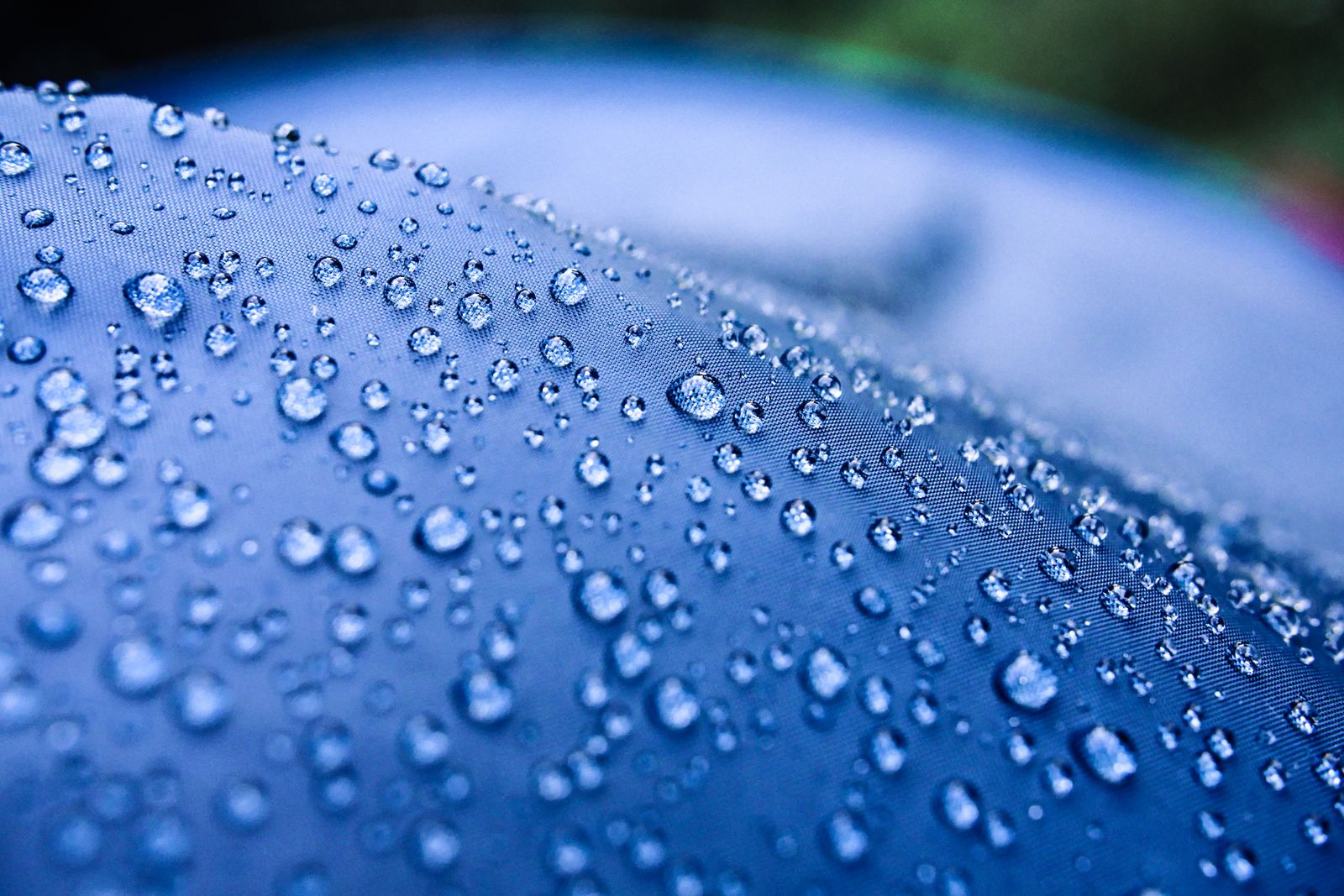
The PU coating on most synthetic tents breaks down slowly over the years by reacting with moisture, and it goes faster when a tent is stored damp and warm. A coating that has gone this way turns sticky, smells musty and flakes off. So drying the tent is the best thing you can do for it. When rain stops beading on the flysheet and starts to soak into the fabric, it is time to reproof it with a reproofer made for tents, sprayed or brushed on to a clean, dry tent. On nylon, re-tension the guy lines when the fabric gets wet. On silnylon, check the seam sealer each season and touch it up where it has worn.
Canvas and polycotton
Canvas packed away damp grows mould and mildew, and over time the cotton rots. Dry it completely, every time. Inside the tent, avoid pressing on the walls when they are wet, because a touch can draw water through the weave. If a canvas tent starts to let water through after some years, it can be reproofed with a proofer made for canvas.
Plastic floors and foil
Wipe a PE or PVC groundsheet clean, dry it and look it over for holes before packing. Check a foil shelter for tears after use, dry it and fold it back into its bag. Small holes and tears in most fabrics can be patched; the tent repair kits range has clear patches, ripstop tape, heavy-duty tape for canvas and seam tape for PU-coated fabric.
Questions people ask
Which tent fabric is the lightest?
Nylon, for the same strength. The lightest nylon tents here weigh under a kilo: a 10D nylon 1-person tent packs to about 0.87kg.
Is a higher denier always better?
Tougher, yes, but heavier and slower to dry. A 10D or 15D flysheet is fine with care on a backpacking tent; a 210D floor is plenty for a tent you carry; 600D and 900D are for tents that stand on a field for weeks or shelters that sit out in all weather.
Is polycotton as good as cotton canvas?
It breathes a little less than pure cotton, but the polyester makes it lighter and harder wearing, and it still drips far less condensation than a coated synthetic tent. That is why most of the canvas-style tents here are polycotton.
Why does my new canvas tent leak at the seams?
It has not been weathered yet. Soak it and let it dry, two or three times, and the cotton swells to close the needle holes.
Which fabric is best in hot sun?
Canvas and polycotton, because they breathe and stay cooler inside. Among the synthetic tents, look for a silver coating with a UPF figure.
Where to go next
- Tents by fabric: every tent sorted by the fabrics its maker names.
- Polyester tents, nylon tents and canvas and cotton tents.
- Tent poles explained: aluminium, fibreglass, steel and air beams.
- Single, double and triple layer tents, on condensation and how many skins a tent has.
- How to choose a tent, if you are starting from the beginning.