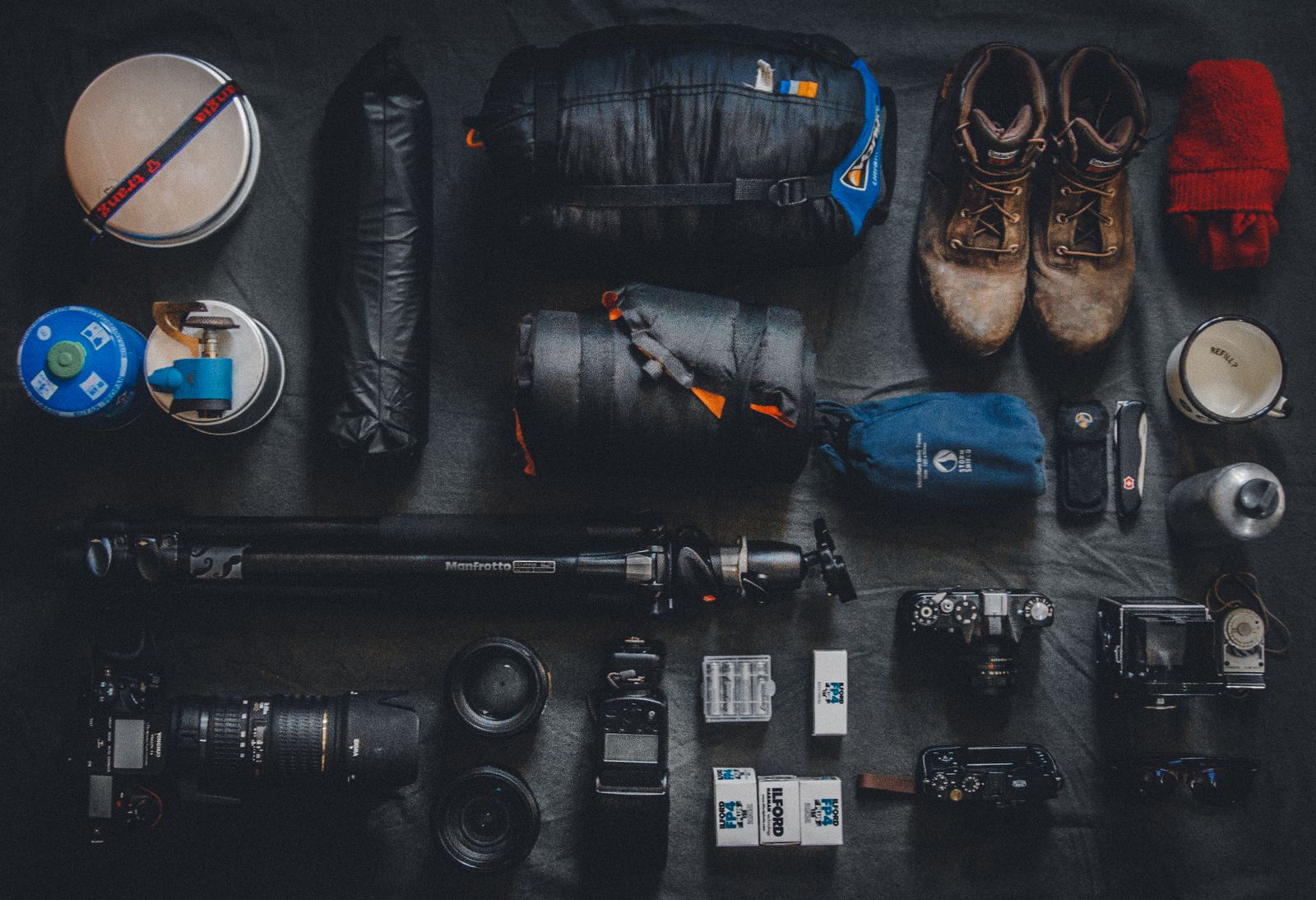
A checklist is the cheapest bit of camping kit there is. Most trips that go wrong go wrong at home, with a missing pole, a flat torch or a waterproof left on the hook by the door. This list covers a weekend on a campsite with a car, then adds what children and dogs need, then cuts it down for wild camping and backpacking. The tent itself is in the guide to choosing a tent; this is everything that goes with it.
How to use this list
Read it through once, cross out what does not apply to your trip, and add what is missing for you, such as medicines, glasses or a hobby. Then use it twice: once as you pack, ticking each thing as it goes in the car or the rucksack, and once as you pack up to come home, so nothing is left on the pitch.
- Pack by group. One bag for the tent and its parts, one for sleeping, one for cooking, one each for clothes. A group you can see is a group you can check.
- Keep the list with the kit. A printed copy in the tent bag means the next trip starts from the same list.
- Pack the tent last into the car, so it comes out first. If it is raining when you arrive, the tent goes up before anything else is unloaded.
- Check, then check again. Pitch a new tent at home before the first trip. The guide to pitching a tent explains why: it is the only way to find a missing peg or a faulty pole before it matters.
Some of what is on this list the shop sells, and links go to those ranges. Much of it the shop does not sell, such as stoves, sleeping bags, mats, first aid kits and clothes, and those are simply things to pack.
The shelter: tent, pegs, mallet, poles, groundsheet
Everything the tent needs to stand up and stay up.
- The tent: inner tent, flysheet and any separate porch or awning, all in their bag.
- Poles: every section, counted, with the shock cord inside each one sound. On an air tent, the pump.
- Pegs, with a few spares. The pegs that come with a tent may not suit every pitch: hard ground bends thin pegs, and sand or soft ground lets them pull out. See tent pegs.
- A mallet with a peg puller. A rubber mallet suits aluminium pegs on grass; a steel hammer suits steel pegs on hard ground. See tent mallets.
- Guy lines, all attached, plus a spare length of cord and a tensioner or two. See guy lines.
- A footprint or groundsheet, the same shape as the floor and a little smaller, so it does not catch rain and run it under the tent. See groundsheets and footprints.
- A repair kit: self-adhesive patches and repair tape for a tear in the flysheet or groundsheet, and some cord. See tent repair kits.
- A peg bag and a pole bag, so loose pegs do not wear through the tent or go missing. See tent bags.
- A rug or carpet for a family tent's living area, if you use one. See tent rugs and carpets.
- A windbreak for a beach or an exposed campsite, if the site allows one. See windbreaks.
- The instructions, or a photo of them on your phone.
Spares worth carrying
A broken pole is the one fault that can end a trip, because a tent will not stand without it. The tent poles range has replacement poles by diameter and length, and the lasting fix is a new pole of the same size; measure yours at home so you know what to look for. Bent and lost pegs are the most common small trouble, so a few spares of the kind that suits the ground earn their place.
Sleeping: bag, mat, pillow
Most of a cold night in a tent is decided by what you sleep on, not what you sleep under. The ground draws heat out of you faster than the night air, and a sleeping bag gives little warmth underneath, because your weight squashes its filling flat.
- A sleeping bag for each person. Most bags are rated to ISO 23537 with comfort, limit and extreme temperatures; if you feel the cold, choose by the comfort figure, and never plan a night around the extreme one.
- A mat, airbed or camp bed for each person, measured to fit the tent. For winter, outdoor retailers usually advise a mat with an R-value of about 4 or more.
- An airbed pump, with batteries or its charging lead, and the airbed's repair patch.
- A pillow, or a stuff sack filled with soft clothes.
- A sleeping bag liner, which adds warmth and keeps the bag clean.
- A warm hat and dry socks for bed, kept in a bag of their own so they stay dry.
- Ear plugs and an eye mask. Campsites are noisy, and at midsummer the sun is up before five in the morning in London.
- A blanket to go over the bags on a colder night than forecast.
A footprint under the tent and a rug inside put one more layer between you and the ground, which helps on a cold night as much as an extra blanket.
Light and power
It gets dark sooner than you expect on a campsite, and finding things in a tent by phone light flattens the phone you may need later.
- A head torch for each person, with spare batteries or charged.
- A tent light to hang from the loop in the roof, so the whole tent is lit and your hands are free. A warm white setting is easier on the eyes in a small tent, and a red mode lets you see at night without waking others. See tent lights.
- A lantern for the living area or the table outside.
- A power bank, charged, and the leads for every phone and light. Some lanterns here charge a phone from their own battery.
- Solar lights for a longer trip, which charge in daylight.
- Reflective guy lines or pull cords, which show up in a torch beam, so nobody trips over your lines at night.
Never take a candle, a gas lamp or anything with a flame into a tent. Tent fabric burns, and fuel lamps give off carbon monoxide. GOV.UK's fire safety advice also says no candles in or near a tent.
Cooking and water: done outside the tent
Cook outside, away from the tent, never in the porch, the living area or under an attached awning. A stove in a tent can set it alight in moments and gives off carbon monoxide. Never take a barbecue into a tent or under an awning, even one that has gone out: it goes on giving off carbon monoxide, which can kill. GOV.UK's fire safety advice says the same. The one exception is a hot tent's own stove, through its stove jack, with a carbon monoxide alarm, which belongs only in a tent made for it.
- A stove, with enough fuel for the trip and a spare, and a flat surface to stand it on that will not burn.
- Lighter and matches, in a waterproof bag.
- A pan, a kettle, plates, bowls, mugs and cutlery for each person, and a sharp knife and a board.
- A cool box and ice packs, frozen the night before.
- A water carrier. Campsites have taps, but rarely next to your pitch.
- A washing-up bowl, washing-up liquid, a cloth and a tea towel.
- Bin bags, several, and a bag for recycling.
- Food: the first night's meal ready to cook, and tea or coffee for the first morning.
- A table and chairs for a campsite, if you have room in the car.
Set the stove up well away from the tent, and away from guy lines that someone could trip on. Fire services advise leaving about six metres between tents where you can, so a fire in one cannot spread to the next.
Clothes for UK weather
British weather can give you sun, wind and rain in the same afternoon, and a campsite in a valley can be cold at night in August. Mountain Rescue England and Wales asks walkers to carry spare clothing, a hat and gloves even in summer, and that holds for a campsite as well as a hill.
- A waterproof jacket for each person, and waterproof trousers if rain is forecast.
- A warm layer, such as a fleece or a down jacket, for the evening.
- Layers you can add or take off, rather than one thick coat.
- A warm hat and gloves, even in summer.
- A sun hat.
- Spare socks, more than you think. Wet feet are the quickest way to a miserable trip.
- Boots or walking shoes, and a pair of slip-on shoes or sandals for trips to the shower block.
- Something dry to sleep in, kept only for that.
- Swimming things and a towel for each person.
- A bag for wet and muddy clothes, so they stay out of the tent.
Sun
The NHS advises sun cream of at least SPF 30 with at least 4-star UVA protection, put on again every 2 hours and straight after swimming. In the UK it advises shade between 11am and 3pm from March to October.
First aid and safety
A first aid kit is one of the first things to pack and the last thing anyone thinks about. St John Ambulance lists what a kit should hold, and keeping it in a clean, waterproof box means it is still usable after a wet weekend.
- Plasters, including waterproof plasters and gel blister plasters.
- Sterile dressings and gauze pads.
- Bandages: roller bandages and a triangular bandage for a sling.
- Disposable gloves, cleansing wipes, adhesive tape, scissors and safety pins.
- A foil blanket to keep someone warm.
- Your own medicines, enough for the whole trip, and any inhalers or allergy pens. Mountain Rescue England and Wales asks for essential medication in every first aid kit.
- A tick remover. The NHS advises fine-tipped tweezers or a tick-removal tool, gripping the tick close to the skin and pulling up slowly without squeezing it.
- Insect repellent. The NHS says products containing DEET are best against ticks. A head net helps against midges; see mosquito nets.
- Sun cream, as above.
- Hand sanitiser and toilet paper.
Safety
- A charged phone, and the campsite's address and phone number written down.
- The nearest hospital or minor injuries unit, looked up before you go.
- A whistle, if you are walking from the site. Mountain Rescue England and Wales gives the distress signal as six long blasts in a minute, a minute's pause, then again.
- A carbon monoxide alarm if you are using a hot tent with a stove, made to BS EN 50291-2.
- Know how to call for help. On a hill, Mountain Rescue England and Wales says dial 999 or 112 and ask for the Police, then Mountain Rescue.
For children and dogs
Children and dogs both need more kit than their size suggests, and both need things that make a strange place feel like home.
Children
- Their own head torch or a small light, so they are not afraid of the dark tent.
- A favourite toy or blanket from home.
- More spare clothes than for adults, and a full change for each day.
- Warm sleeping things: children get cold at night before they complain about it.
- Sun cream and a hat. The NHS says children should wear at least SPF 30, and babies under 6 months should be kept out of direct strong sunlight.
- Wellies, for mud and wet grass in the morning.
- Games, cards or a book for a wet afternoon.
- Any children's medicine, and a thermometer.
- A plan for the night-time toilet trip: a light by the door, and shoes they can step into.
Dogs
- A lead, and a spare.
- A collar and tag with your name and address. GOV.UK says a dog must wear one in a public place, and the RSPCA suggests a tag with your holiday address and contact details.
- Its microchip details up to date before you leave.
- Its bed, or a blanket that smells of home.
- Food for the whole trip, bowls, and water for the journey.
- Poo bags, plenty of them.
- Two towels: one for paws at the door, one for drying off.
- A tick tool, and any medicine it takes.
- The nearest vet to the campsite and its out-of-hours number, which the RSPCA advises looking up before you go.
- Shade for a hot day, and a plan so the dog is never left alone in the tent or the car on a warm day.
For wild camping and backpacking: the cut-down list
Carrying it all on your back changes the list. Every item has to earn its weight, and most of the comforts above stay at home. Wild camping is allowed in some places and not in others, and the guide to wild camping in the UK sets out where; check before you go, and ask the landowner's permission where it is needed. The guide to backpacking and trekking tents covers the tent itself.
- A light tent, pegs and guy lines, with the poles or walking poles it pitches on.
- A sleeping bag and mat, the lightest that will keep you warm on the coldest night forecast.
- A small stove, fuel, a lighter, one pan, a mug and a spoon. Cook outside, on a flat surface that will not burn, never in the porch.
- Water, and a way to treat it: boil it, use purifying tablets, or a filter, checking what the filter removes.
- Food for each meal, and something extra.
- A trowel, toilet paper, hand sanitiser and sealable bags. Go at least 30 metres from water, dig a hole about 15cm deep and fill it in, and carry the paper out.
- Map and compass, and the skill to use them, as well as a phone.
- A head torch and a whistle.
- Waterproofs, a warm layer, a hat and gloves, even in summer.
- A first aid kit cut down to plasters, blister plasters, a dressing, a bandage, tape and your own medicines.
- An emergency bag, in case you have to stop before the planned pitch. See survival bivvy bags.
- A charged phone and a small power bank.
- A rubbish bag, because everything you carry in comes out with you.
Leave the mallet at home on soft ground and push light pegs in by hand or with a flat stone; take one only if you know the ground is hard.
Before you leave and before you pack up
Before you leave
- Pitch a new or borrowed tent at home, count the pegs and poles, and check the zips.
- Check the forecast. Mountain Rescue England and Wales points walkers to the Met Office, and to the Mountain Weather Information Service for the hills. Look again the evening before.
- Charge every phone, light and power bank.
- Tell someone where you are going and when you will be back. Mountain Rescue England and Wales asks walkers to leave their route, start and finish, return time and contact details.
- Check the campsite's booking, its arrival time and its own rules, especially on dogs, fires and barbecues.
- Freeze the ice packs and pack the cool box last.
Before you pack up
- Let the tent dry if you can: shake off the rain and take the flysheet down last, after the sun or wind has had a chance at it.
- If you must pack it wet, unpack it and dry it fully at home as soon as you can, or mould will mark it. The guide to tent care explains how to dry, clean and store it.
- Pull each peg with the mallet's puller, along the line it went in, never by the guy line.
- Count the pegs back into their bag, and the pole sections into theirs.
- Push pole sections out of their sleeves rather than pulling them, so the joints do not come apart inside.
- Walk round the pitch once: pick up rubbish, ring pulls and anything dropped, and fill in any toilet hole.
- Note anything that broke or ran out, and add it to the list for next time.
Questions people ask
Do I really need a footprint?
Not always, but a footprint protects the tent's own groundsheet from stones and wear, and it is easier to replace than a groundsheet. Choose one a little smaller than the floor.
Do I need a mallet for a pop-up tent?
Yes, if you peg it down, and every tent should be pegged. The pop-up part is the frame, not the pegs.
How many spare pegs should I take?
A few of the kind that suits the ground you expect, so a bent or lost peg is never the reason a corner flaps all night.
Can I cook in the porch if it is raining?
No. Cook outside, away from the tent, under a tarp pitched well clear of it if you need cover from the rain. A stove in a porch can set the tent alight and gives off carbon monoxide.
What gets forgotten?
Small things that matter more than their size: the pump, the mallet, the tin opener, a lighter, the head torch, and a waterproof. That is why the list is used twice, once to pack and once to pack up.