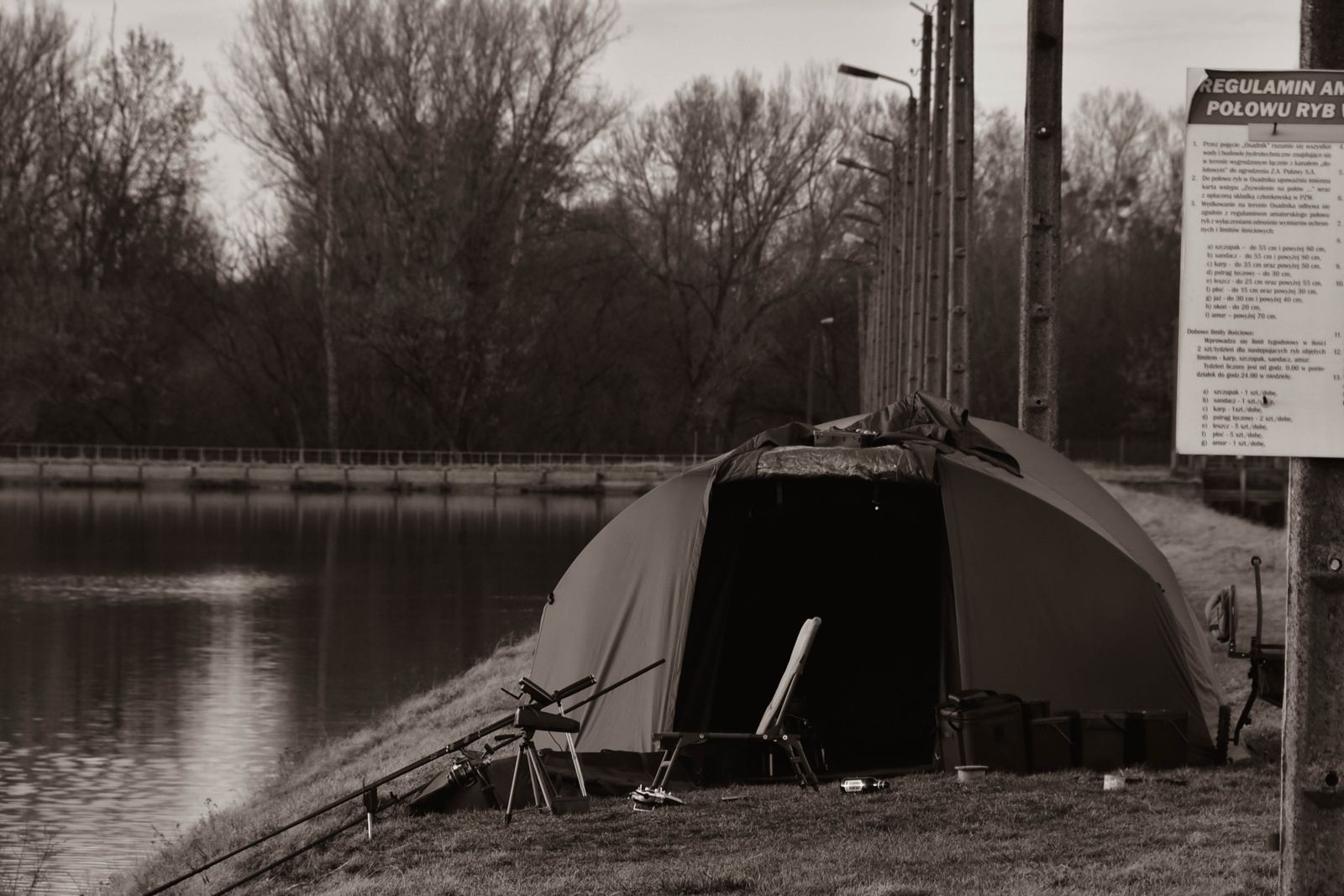
Almost every tent gives a waterproof rating in millimetres, and many give two or three. The figures look precise, and they are, but they measure one thing only: how hard water has to push before it comes through a piece of the fabric in a laboratory. This guide explains what that test is, why a flysheet and a groundsheet are rated differently, what rating suits camping in Britain, and why the seams, the zips, the pitch and the air inside the tent decide whether you wake up dry. It ends with how to keep a tent's rating once you own it. If you are still choosing the kind of tent, start with how to choose a tent and come back here.
What the millimetre figure means: the hydrostatic head test
The rating is called the hydrostatic head. It is the height of a column of water, in millimetres, that a fabric holds back before water comes through it. A rating of 1,000mm means the fabric held back the pressure of a column of water one metre tall. A rating of 3,000mm means three metres. The higher the number, the harder the water has to push.
The test is set out in an international standard, ISO 811, which in Britain is published as BS EN ISO 811:2018, the edition that replaced the older BS EN 20811. A sample of the fabric is clamped in a test rig with water on one side. The water pressure is raised steadily, and the tester watches the other side of the fabric. The first drop or two through the fabric do not end the test. The reading is taken when water comes through in a third place, and that pressure, given as millimetres of water, is the rating.
Three things follow from the way the test is done.
- It is not a measure of rain. A 2,000mm rating does not mean the tent will stand up to 2,000mm of rainfall. It is a pressure, and ordinary rain falling on a taut flysheet presses on it far less than a two-metre column of water. The figure tells you how much pressure the fabric can take before it gives way.
- It is a test of new fabric, not of the tent. The sample is a flat piece of cloth. The seams, zips, stitch holes, the way the tent is pitched and the age of the coating are not part of it.
- The standard does not say what counts as waterproof. ISO 811 describes how to measure, and nothing more. About 1,000mm is the lowest figure usually called waterproof in the trade, but that is a convention, not a pass mark set by the test.
So the number is a fair way to compare one fabric with another. It is not a promise that a tent will keep the rain out, and the rest of this guide is about the other things that do.
Two figures, the flysheet's and the groundsheet's
Most tents are made of more than one fabric, and each one has its own job. The flysheet is the outer skin that takes the rain. The groundsheet is the floor. On a double-layer tent there is also the inner tent, which is not meant to take rain at all. A product page often gives a figure for each, and they can be very different.
The groundsheet is usually rated higher than the flysheet, because of what happens to it. When you kneel, sit or lie on a floor pitched on wet grass, your weight presses the wet ground against the fabric from below, far harder than rain presses on a flysheet. A groundsheet with a low figure can let water up through it under a knee or a hip even when the flysheet above is doing its job. Guides from UK outdoor shops usually suggest a groundsheet of around 3,000mm or more.
Here are the figures the makers give on some of the tents in this shop:
- TOMSHOO 2 Person Single Layer Camping Tent. Flysheet: PU1000mm. Groundsheet: PU1500mm.
- Archeos 3P Double Layer 4 Season Backpacking Tent. Flysheet: PU2000mm. Groundsheet: PU3000mm.
- Widesea 2 Person Winter Tent. Flysheet: PU3000mm. Groundsheet: PU5000mm.
- Cloud Up Pro Ultralight 1/2 Person Backpacking Tent. Flysheet: PU3000mm. Groundsheet: PU5000mm.
- TAIJI2 Ultralight 2 Person Double Layer Tent. Flysheet: PU 5000mm. Groundsheet: PU 6000mm.
- One Person Camouflage Tent. Flysheet: about 1500mm. Groundsheet: about 1000mm.
The last row is the exception worth noticing: a groundsheet rated lower than its flysheet. It is the kind of tent where a footprint underneath earns its place. Some tents give a third figure. The Archeos gives PU450mm for its inner tent, and the BLACKDOG Fantasy Maze dome tent 3000mm or more for its outer tent and 1000mm or less for its inner. That low inner figure is not a fault: the inner sits under the flysheet and is meant to let the moisture you breathe out pass through. The TAIJI2 adds a fourth, PU 4000mm, for the floor mat that comes with it, and the Naturehike Opalus tunnel tent is rated 4000mm on its outer tent but its free floor mat only 1000mm.
When a tent is filed in one of this shop's waterproof rating ranges, it goes by the flysheet's figure, because that is the fabric that takes the rain. Where a maker gives only a groundsheet figure, that one is used. Read every figure on the product page, not only the biggest.
Reading the way makers write it
Makers do not all write the figure the same way, so it helps to know the forms. "PU3000mm" is a polyurethane-coated fabric rated 3,000mm. "3000mm+" or "over 3000mm" means at least that figure. A span such as "1000-1500mm", which several pop-up tents here give, means the fabric falls somewhere in that range, so read it as the lower number. "Waterproof index" is another name for the same rating. Where a tent comes in versions, as the Pop Up Tent 4-6 Person Automatic does, each version can carry its own figure: its single-layer version is rated 2,000mm to 3,000mm and its double-layer version 3,000mm to 4,000mm. And where a product page gives no figure at all, assume nothing and treat it as a tent for fair weather.
What rating you need for UK camping
There is no single right number, because the right number depends on where you camp, for how long, and in which months. What UK outdoor shops broadly agree on is this: about 1,500mm is the least that copes with British rain, and around 3,000mm on the flysheet is a dependable figure for most camping in Britain, long and heavy spells of rain included. Beyond that, a higher figure is for harder conditions rather than more comfort.
Wind matters as much as rain. Rain driven sideways by a strong wind presses into the fabric much harder than rain falling straight down, and on open ground or a hillside that is when a low-rated flysheet starts to struggle. Time matters too: a tent left up through a wet week takes far more than one pitched for a single showery night.
Up to 2,000mm
In this shop's waterproof to 2,000mm range, the flysheet is rated under 2,500mm, and on the tents there it runs from 1,000mm to 2,000mm. This is the range for summer weekends, festivals, the garden and sheltered campsites in settled weather. It holds a good many light trekking tents, whose thin fabrics are often rated 1,500mm to 2,000mm, and a lot of pop-up tents and beach shelters. The Hexagonal Pop Up Camping Tent for 3 to 6, for example, is rated 1,000mm to 1,500mm on both its outer and its groundsheet. Treat tents at the bottom of this band as fair-weather tents. Below about 1,500mm, a tent is a risk in heavy rain.
Up to 3,000mm
The waterproof to 3,000mm range takes flysheets from 2,500mm to 4,999mm. This is the band for most British camping: a week on a campsite in August, a wet May bank holiday, a family holiday when the forecast is not kind. It includes backpacking tents such as the Naturehike Cloud Up at PU3000mm with taped seams, family tents, hot tents and roof tents at 3,000mm, and some backpacking tents at PU4000mm. If you are only going to own one tent for Britain, this is the band to look in first.
5,000mm and over
The waterproof 5,000mm and over range is for flysheets rated 5,000mm or more. The highest figure in it is the Multi-Mode Car Side Awning at PU 8000mm+ with taped seams, and it also holds the TAIJI2 backpacking tent and a single-layer pyramid tent rated 5,000mm on its canopy and its floor. A figure this high earns its place on open hills, in wind-driven rain, and on long trips when the tent stays up in the wet for days. For a campsite it is more than you need, though it does no harm. Higher-rated fabric is not always heavier: the TAIJI2's maker gives a total of 1800g for the inner, outer and poles. If you camp in the mountains, read it alongside the 4-season tents, because strong poles and a snow skirt matter there as much as the rating.
Coatings, taped seams and zips
Woven fabric on its own lets water through between the threads. What makes a tent fabric waterproof is a coating, and the letters in front of the rating usually say which one.
- PU is polyurethane, the most common coating, used on polyester and nylon. "PU3000mm" means a polyurethane-coated fabric rated 3,000mm.
- Silicone is used on many light nylon tents, often called silnylon. Silicone-coated fabric is light and slippery. Some fabrics are silicone on one side and PU on the other.
- PE is polyethylene, a plastic sheet used for many groundsheets and the floors of pop-up tents.
The coating covers the fabric, but a tent is sewn together, and every stitch is a hole through it. That is why tents that are made for rain have taped seams: a strip of waterproof tape sealed over the stitching on the inside. The Widesea winter tent and the Naturehike Cloud Up both say their seams are taped. Fabric coated with silicone on both sides is different, because tape will not stick to it. Those seams are sealed with a liquid silicone sealant instead, and on some light tents the maker leaves that job to you. Where a product page says nothing about the seams, ask yourself how the water is kept out of them.
The consumer body Which?, testing tents in British weather, found that most leaks come in through the seams and the zips, not the fabric. A zip is a gap in the flysheet by its nature. Look for a flap of fabric over the outside of the door zip, which sheds rain away from the teeth, and for doors that do not open inwards, since an inward-opening door can tip the water that has gathered on it straight into the tent. The places where poles and guy lines pull on the fabric are the other weak spots: a good tent reinforces them with extra layers of fabric.
Why a well-rated tent can still be wet inside
Which? also found that tents with similar high ratings behaved very differently in the same weather: one bone dry at the end, another with a puddle inside. A high rating is a good start, but water inside a tent usually comes from one of these:
- Condensation. You breathe out moisture all night; one person can breathe out up to a pint of water. It settles on the coldest surface, which is the inside of the flysheet. On a cold, still night it can run down and drip, and it looks like a leak. Water spread in a fine film or droplets over a wide area is condensation. Water that keeps coming from one spot is a leak. A double layer moves the condensation off you but does not stop it. Open the vents, even when it is raining, keep wet coats and boots out of the sleeping area, and never cook inside. There is much more on this in single, double and triple layer tents.
- Touching the fabric. Where something presses against a wet flysheet from inside, a hand, a rucksack or a sleeping bag, the fabric draws water through to it. The same happens if the flysheet sags onto the inner tent.
- A slack pitch. A flysheet pitched loose flaps, sags and holds pools of water. Pitch it taut, peg out every guy line, and tighten the lines again in the evening, because many fabrics stretch when they are wet. Good tent pegs for your ground keep it that way in wind.
- The ground. Do not pitch in a dip, where rain gathers. And if you use a footprint under the tent, keep it a little smaller than the floor. One that sticks out past the edges catches the rain and runs it underneath the groundsheet, where it sits.
- A worn fabric. The coating wears with age, sunlight and packing, and the rating falls with it. The next section is about keeping it.
A footprint under the tent protects the groundsheet from stones and wear and adds a layer against wet ground. In a long downpour, a tarp pitched over the tent or its doorway gives the flysheet less to do and gives you somewhere dry to take boots off. See tarps and tarp shelters.
Keeping the rating: drying and reproofing
A tent's waterproofing lasts far longer if it is put away dry. A tent packed damp grows mildew, which marks the fabric and harms the coating. If you have to strike camp in the rain, pitch the tent again at home, in the garden or a garage, as soon as you can and leave it until every part is dry, groundsheet and pegs bag included. Store it loose, somewhere dry and out of the sun. Sunlight is hard on coatings and fabric, so a tent left pitched all summer ages faster than one taken down between trips.
Clean it gently. Use a tent wash, or clean water and a sponge, never household detergent or washing powder, which can strip the water repellency from the outside of the fabric. Clean it pitched, rinse it, and let it dry pitched.
New flysheets have a water-repellent finish on the outside, so rain gathers into beads and runs off. With time the finish wears, and rain starts to soak into the outer face of the fabric instead of beading. That is the sign to reproof. Use a tent reproofer made for the fabric. Pitch the tent, work panel by panel over the outside of the flysheet with an even coat, wipe off any excess after a few minutes, and leave it to dry fully. Some proofers go onto wet fabric and some onto dry, so follow the label. Reproofing restores the finish that makes rain bead.
A polyurethane coating that is flaking or peeling on the inside of the fabric needs attention straight away: follow the maker's advice for that tent. Seams that have started to leak can be sealed again: hot-melt seam tape is ironed onto the seams of PU-coated fabric at home, and self-adhesive patches seal small tears and holes. Both are in tent repair kits. A tent with a silicone-coated fly is resealed with silicone seam sealer rather than tape.
Questions people ask
Is 2,000mm enough for camping in Britain?
For a summer weekend with a few showers, usually yes. For a wet week, rain driven by the wind or a pitch on open ground, a flysheet of around 3,000mm is the safer choice.
What does "PU" in front of the number mean?
It is polyurethane, the waterproof coating on the fabric. A silicone coating, used on many light nylon tents, does the same job. The number after it is the hydrostatic head in millimetres.
Why does my tent have a low figure for the inner tent?
Because the inner tent is not meant to keep rain out. The flysheet does that. The inner lets the moisture you breathe out pass through it, so it stays off your sleeping bag.
My tent is wet inside in the morning. Is it leaking?
Probably not. A fine film of water over a wide area of the flysheet is condensation. Water that comes again and again from one place, often a seam or a zip, is a leak. Open the vents and keep the flysheet off the inner tent; if one spot still leaks, seal that seam.
Is a polycotton tent with a low rating any good?
It is made differently. The OneTigris CONIFER polycotton hot tent, for example, is rated 400mm from its water-repellent finish and is sold for its breathability and its resistance to condensation. Check the rating against the weather you expect, and see canvas and cotton tents and tent fabrics explained.
Where to go next
- Shop by rating: waterproof to 2,000mm, waterproof to 3,000mm and waterproof 5,000mm and over, or all three in tents by waterproof rating.
- Protect the floor with groundsheets and footprints, and keep patches and seam tape in the bag from tent repair kits.
- For the hills and the winter, see 4-season tents and mountain tents.
- Read on: single, double and triple layer tents, tent fabrics explained, tent sizes explained and how to choose a tent.
Delivery is included in every price and tracked to your door.