A gazebo, a marquee and a party tent all put a roof over people who are standing, sitting, eating or selling outdoors, for a few hours or a few days. What separates them is size, how they are built, who puts them up and how they are held down. This guide explains each kind, what keeps them down, when to take them down, how many people fit under each, and which suits a garden, a market stall, a wedding or a festival.
A gazebo, a marquee, a party tent: what each is
The words overlap, and sellers use them loosely, so here is what each usually means.
- A gazebo. Size: usually 2 by 2m to about 4 by 6m. Built: a roof on four or more legs, either a folding frame that opens in one piece or a frame put together from tubes. Put up by: one or two people, in minutes.
- A gazebo tent or screen house. Size: a family-sized shelter, often around 3 by 3m. Built: a gazebo with walls of fabric or mesh, for eating and sitting under on a campsite or in a garden. Put up by: one or two people.
- A marquee. Size: from a 3 by 3m pagoda to spans of 20m and more. Built: a frame of aluminium or steel beams with a heavy PVC-coated cover and walls. Put up by: a crew, following the maker's instructions.
- A party or event tent. Size: anything from a two-person clear dome to a 20 by 40ft tent. Built: a marquee, a printed gazebo, or a tent made to be looked at, such as an inflatable dome lit from inside. Put up by: depends on the tent.
The shop's gazebo tents range holds the walled and mesh gazebos for garden and campsite, from a steel-frame gazebo to screen houses and family canopies. The pop-up gazebos range has the folding-frame gazebos for stalls and stands. Marquees has the large framed tents for weddings and events, and party and event tents brings the marquees and printed gazebos together with inflatable domes, clear bubble tents and lights.
None of these is made to sleep in. Most have no floor, and a gazebo is built to keep off sun and showers, not to stand unwatched through a night of changing weather.
Pop-up gazebos: the frame, the sizes and the legs
A pop-up gazebo has a folding frame: a criss-cross of struts between the legs that opens out in one piece, like a concertina. Two people take a side each, walk the legs apart until the frame is fully open, put the roof on or check it is fixed, then click each leg up to the height they want. There are no poles to thread and no loose pieces to lose, and taking it down is the same in reverse. That is why it is the usual choice for a market stall, a sports day, a garden party or a trade stand.
The frame is most of what you buy
The roof fabric matters, but the frame decides how steady the gazebo is and how long it lasts. The printed gazebos here come with three grades of aluminium alloy frame:
- Standard. Leg: 38mm, square. Suits: occasional use in the garden or at a fete.
- Commercial. Leg: 40mm, hexagonal. Suits: regular use, a stall most weekends.
- Premium. Leg: 50mm, hexagonal. Suits: the heaviest use, and the steadiest in a breeze.
A thicker leg is stiffer and steadier in a breeze. The maker describes these aluminium frames as resisting corrosion and lasting longer than iron, and aluminium is lighter to carry than steel. The large folding canopy here, in 5m and 6m sizes for 6 to 8 people, also stands on an aluminium alloy frame.
Sizes
Pop-up gazebos are often sold in feet. 10 by 10ft is about 3 by 3m, the most common size and the one most side walls are made for. The printed gazebos come in 10 by 10ft, 10 by 15ft and 10 by 20ft, with full walls, half walls or the roof only. Measure the space first, leaving room round the legs for weights.
The legs and the height settings
The legs on the printed gazebos have four height settings. Raise them all for headroom, or drop two legs on one side a notch so rain runs off instead of pooling in the roof. Side walls are cut for a frame's size and leg shape: the walls here fit 10 by 10ft straight-leg pop-ups, and an angled-leg frame, wider at the foot, is a different shape.
Mesh pop-ups and screen houses
The pop-up mesh screen tent here, for 4 to 6 people, has mesh on every side and folds flat to 69 by 69 by 8cm without tools; the 6-sided version weighs 5.5kg and the 8-sided 6.8kg. Mesh keeps midges off the table on a still evening and still lets the breeze through.
Steel frames and larger marquees
Above the size two people can carry and open, the frame changes. Instead of a folding concertina, you get a frame built from separate parts: legs, roof bars and brackets, put together on site.
Steel-framed gazebos and party tents
The steel-frame gazebo here is put together with heavy-duty support brackets, in sizes from 2 by 2m to 4 by 6m, with a 300D canopy rated over 3,000mm. Steel is heavier than aluminium and slower to put up, but stiff and steady once standing, which suits a gazebo that goes up in the garden for the summer rather than one carried somewhere new each weekend. The 20 by 40ft party tent here has a galvanised steel frame, side walls and twelve arched windows. Galvanising is a zinc coating, but a chipped frame can still rust where the coating is broken, as the guide to tent poles explains. Other tents on steel frames, such as big family tents, a yurt and a glamping pod cabin, are in steel frame tents.
Marquees
A marquee is the next step up: a frame of beams, usually aluminium, with a heavy PVC-coated cover and walls, for weddings, banquets, trade shows and big parties.
- Clear span marquees have no poles inside, so the whole floor can be used. One is sold in spans from 6m to 21m with eaves from 3m to 5m high; a 10 by 20m one has a 7.2m ridge.
- Pagoda marquees have a steep pointed roof. The 5 by 5m pagoda has a 2.5m eave and a 5.1m ridge, and several can be joined together. A 3 by 6m industrial pagoda comes with its side walls.
- Clear roof marquees and a round dome: clear roofs in sizes such as 10 by 15m, and a dome for 300 to 500 people.
The covers here are double PVC-coated polyester, from 650 to 900g a square metre, and several state a flame retardant standard, such as DIN 4102 B1 and M2. If the event is at a venue, ask what they need to see, such as the cover's fire rating, before you order.
Who puts a marquee up
A crew. The Purple Guide, the events industry's guidance on temporary structures, says larger structures should be put up by the supplier's trained staff, who should give a signed handover inspection report saying the structure is safe to use. If you are buying a marquee to hire out or for your own events, plan the crew, the tools and the time, and follow the maker's instructions step by step.
Side walls, weights and pegs: keeping it on the ground
A gazebo is light for the size of its roof, and that roof is a flat sail on four thin legs. A gust that gets under it can lift the whole frame, and a gazebo that takes off is a danger to everyone near it. Holding it down is the most important part of using one.
How much weight
Makers and sellers commonly say:
- A gazebo up to 3 by 3m, roof only. Weight on each leg: about 12.5kg to 15kg as a minimum.
- A bigger gazebo, 3 by 4.5m and over, roof only. Weight on each leg: about 20kg.
- Any size with side walls fitted. Weight on each leg: at least 25kg.
Those are Gazebo Shop's figures, from its help centre; Gala Tent says at least 13kg a leg on hard ground. Both say to add more on an exposed site or when the weather is unsettled. If your own gazebo's instructions give a figure, use that first.
Setting the bags here against those figures
The side walls and weights range has sand bags and water bags that strap round the legs. A sand bag that holds up to 7.2kg is about half of the roof-only figure, so a 3 by 3m gazebo needs two on each leg. A 10kg bag is close but short on its own. A 20kg water bag on each leg is over the roof-only figure for a 3 by 3m gazebo, but with side walls on, even that is short of 25kg, so a leg needs a second bag. Every bag comes empty and is filled on site: water bags at a tap, and one maker says to fill to 90%; sand bags with sand, stones or soil. Strap each bag low on the leg, at the foot, and fix the strap to the frame, not the roof fabric, which can tear when the wind tugs at it.
Pegs and guy ropes on grass
On grass, peg every leg through its foot plate and use the guy ropes where the gazebo has them. Gala Tent suggests thick steel pegs set at a slant, and Gazebo Shop warns that standard pegs may not hold in soft ground. Run each guy rope out from the corner at an angle, so it pulls against the lift. The tent pegs range has forged steel pegs in 20, 30 and 40cm, and the guy lines range has reflective lines that show up in a torch beam at an evening party. Weights and pegs together hold better than either alone.
Side walls
Side walls keep out wind, rain, low sun and onlookers, but a wall turns the gazebo into a much bigger sail, which is why the weight figure jumps when walls go on. A good compromise is a wall on the side the weather comes from and the rest open. The walls here, two khaki walls 10ft by 7.1ft and a single waterproof wall in five colours, fit 10 by 10ft straight-leg pop-ups.
Wind: when to take it down
A gazebo is a fair-weather shelter. Weights and pegs keep it down in a breeze; nothing makes it a storm shelter.
The figures makers give
Makers and sellers give different limits, and many give none. Gala Tent says gazebos should not be used in winds over 30mph, and that winds above 30mph can become unsafe for a gazebo depending on conditions and how exposed it is. Your gazebo's own instructions come first, and some set a lower figure. If they give none, treat a forecast of strong wind as the time to take it down.
Watch the gusts, not the average
A forecast usually gives the mean wind speed and the gust speed. The gust is what lifts a gazebo, and it can be far higher than the mean, so a forecast of 15mph with gusts of 35mph is a forecast for taking it down. Check it the evening before and again in the morning.
What to do as the wind rises
- Open or take off the side wall facing the wind first, because a closed wall is what the wind pushes on. Gala Tent says removing side walls in exposed conditions often improves stability.
- Lower the legs to their shortest setting. A lower roof catches less wind.
- If it keeps rising, take the roof off the frame, then fold the frame. Two people, one each side, as for putting it up.
- Never hold a gazebo down by hand in a gust. Let it go before it lifts you or someone else.
Rain
Water pooling in the middle of the roof is heavy enough to push the struts out of shape. Keep the roof tight so water runs off, lower two legs on one side, and push standing water off from underneath as soon as you see it. The guide to waterproof ratings explains what a figure such as the steel-frame gazebo's 3,000mm means.
Marquees in wind
Some marquees here give a wind rating: 80km/h, about 50mph, on one, and up to 100km/h, about 62mph, on others. A rating like that holds only when the marquee is put up and fixed down exactly as its maker says. The Purple Guide says structures must be secured to the ground taking account of their wind ratings and the weather on the day, and that wind should be watched with an anemometer, a wind speed meter, so action is taken before there is any risk of the structure being blown over.
How many it seats and stands
The number of guests a gazebo or marquee takes depends on what they are doing. People sitting at tables need far more room than people standing with a drink. Marquee sellers work from a figure for each guest. Gala Tent, which sells and hires marquees, gives these:
- A seated dinner at round tables. Space per guest: about 1.5 square metres.
- Rows of chairs, as for a ceremony or a talk. Space per guest: about 1 square metre.
- Standing, as for a drinks reception. Space per guest: about 0.75 square metres. GL events, another marquee company, says most guides allow 0.5 to 1 square metre.
Then add the extras. Gala Tent allows a 3 by 3m dance floor for every 15 to 20 people dancing, 3 by 3m for each section of bar, 3 by 2m of buffet for every 50 guests, and at least 30% extra space at a wedding.
Working it out
Multiply length by width for the floor area, then divide by the figure for your event. For some sizes in the shop, before any bar, buffet or dance floor:
- A 3 by 3m gazebo. Floor: 9 square metres. Seated: about 6. Standing: about 12.
- A 3 by 6m gazebo or pagoda. Floor: 18 square metres. Seated: about 12. Standing: about 24.
- A 20 by 40ft party tent, about 6 by 12m. Floor: about 74 square metres. Seated: about 49. Standing: about 99.
- A 10 by 20m marquee. Floor: 200 square metres. Seated: about 133. Standing: about 266.
Those are the most a space holds, not how many will be comfortable. Take off room for the bar, the food and the dance floor, add the 30% for a wedding, and a marquee that looked big enough often needs to be the next size up. The makers' own figures help too: the 3 by 4m family canopy is sold for 6 to 10 people.
Garden, market stall, wedding, festival: which suits which
The garden
For a summer of meals outside, a steel-frame gazebo or a screen house that stays up for weeks is less work than a pop-up taken down each evening. Mesh keeps the insects off the table; on a patio, use weights on every leg. The garden tents range has other shelters for the back garden: clear bubble tents, a pop-up pavilion, a shade sail and solar lights.
Barbecues and gazebos
Keep the barbecue out from under the gazebo. GOV.UK's fire safety advice says never to use a barbecue indoors, in a tent or under an awning, and to keep it well away from sheds, fences, trees and shrubs. A gazebo roof traps heat and smoke right where the fabric is, and none of the gazebos here is sold for cooking under. Put the barbecue in the open, and light the gazebo with outdoor lights, never candles.
A market stall or a trade stand
A pop-up gazebo is the usual choice, and the printed gazebos here go up in around 5 minutes with two people, carry your name on the canopy and walls, and offer flame retardant fabric as an option. Markets are often on hard ground, so bring enough weight for every leg. Ask the organiser the size of your pitch before choosing between 10 by 10ft and 10 by 20ft.
A wedding or a big party
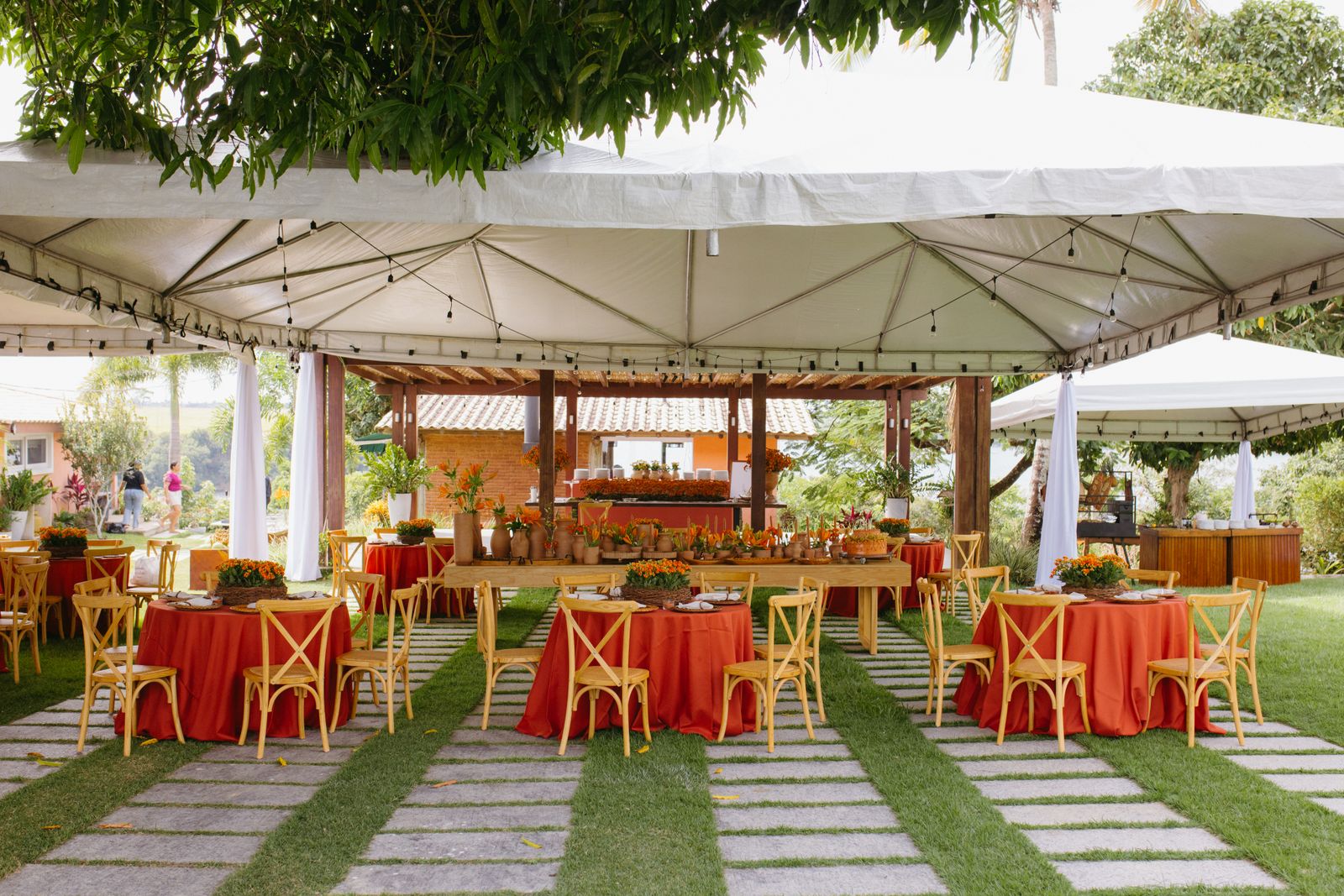
Here it is a marquee or a large party tent. Start from the guest numbers, using the figures above, then check the ground: level grass takes pegs, while a car park or patio needs weight plates or expansion bolts, which the round dome lists among its ways of fixing. The inflatable domes in party and event tents stand only while their blower runs, so they need power at the venue. The guide to bell tents and glamping covers tents for guests to sleep in.
A festival or a campsite
A gazebo between a group's tents gives a dry place to sit, but check the festival's own rules first: some festivals do not allow gazebos, and Glastonbury's prohibited list for 2024 included them. On a campsite, check the pitch is big enough. Peg every leg and guy it out, because a gazebo that lifts in a crowded field lands on other people's tents, and take it down when you leave it for the day.
Questions people ask
Can I sleep in a gazebo?
No. Gazebos are made to stand under, not to sleep in: most have no floor, and they are not built to be left unwatched through a night of changing weather. The 2-in-1 screen house here can shelter a 2-person inner tent, but for sleeping, buy a tent.
Can I put a barbecue under my gazebo?
No, keep it out in the open, well away from the fabric. GOV.UK's fire safety advice is never to use a barbecue in a tent or under an awning, and none of the gazebos here is sold for cooking under.
How much weight does a 3 by 3m gazebo need?
Makers commonly say about 12.5kg to 15kg on each leg with the roof only, and at least 25kg on each leg with side walls, more on an open site. Your gazebo's own instructions come first.
Can I leave a gazebo up overnight?
Only if it is weighted or pegged on every leg and the forecast is calm. If wind is forecast, take it down. Gala Tent says gazebos should not be used in winds over 30mph.
Will these side walls fit my gazebo?
They are made for 10 by 10ft, about 3 by 3m, straight-leg pop-ups. Angled-leg frames are a different shape.
Where to go next
- For the garden and campsite: gazebo tents and garden tents.
- For stalls and stands: pop-up gazebos.
- For weddings and events: marquees and party and event tents.
- To keep it down: side walls and weights, tent pegs and guy lines.
- Read on: how to pitch a tent, and pitching in wind and rain, tent poles explained and tent waterproof ratings explained.
Delivery is included in every price and tracked to your door.